Climate Resilient Santa Cruz: Water Treatment Plant Improvement
In the face of severe wildfires, longer droughts, record rainfall years and other signs of climate change, the Santa Cruz Water Department is prioritizing critical, climate-resilient projects that meet our community's climate change-driven challenges and ensure reliable, safe drinking water is available.
The Graham Hill Water Treatment Plant Improvement Project aims to do that by upgrading aging infrastructure, including hardening the water treatment plant to be secure from future wildfire threats. Here are the goals of the project:
 Deliver a climate resilient water treatment plant that meets our community's climate change-driven challenges and ensures reliable, safe drinking water is available 24/7/365
 Upgrade aging infrastructure to meet current and anticipated seismic standards, and become a wildfire-hardened property
 Include new water treatment facilities that will operate with state-of-the-art technology, increased efficiency and greater performance, in order to meet future water quality conditions expected to be impacted by climate change

Ensure the City of Santa Cruz is prepared to meet future regulations related to water treatment, including for contaminants of emerging concern, and increase system reliability and efficiency
Project Background
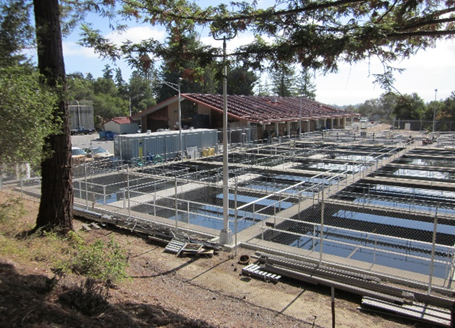
The Graham Hill Water Treatment Plant (GHWTP) was originally constructed in 1960, and expanded in 1968. Apart from the nearly completed Concrete Tanks Replacement project, it has not been substantially improved since the 1980s. The GHWTP Facility Improvements Project (Project) will replace and substantially upgrade the majority of the existing water treatment processes at the GHWTP and associated infrastructure with modern facilities. The Project will improve the City of Santa Cruz’s (City) treatment reliability to meet current and anticipated future water quality requirements; support the treatment of winter water to facilitate implementation of the City’s Water Supply Augmentation Strategy and Securing Our Water Future (SOWF) Policy; improve the ability to treat variable and degraded source water quality conditions, such as those associated with post-wildfire, severe storms, and droughts; and meet current seismic, building, electrical, and fire code requirements.
Key Project Outcomes
Improve Treatment Reliability: The GHWTP faces a number of challenges stemming from the facility’s age and condition, water quality changes related to climate change, the nature and condition of the City’s water distribution network, anticipated need for expanded treatment of winter water, and potential regulatory changes. While water treated at the GHWTP currently meets and exceeds all state and federal drinking water requirements, the City has identified several vulnerabilities. The Project is needed to remediate deteriorating infrastructure, improve the treatment process reliability by incorporating flexibility and adaptability to address variable and degraded source water quality conditions, and to address reasonably anticipated future water treatment regulations.
Facilitate Water Supply Augmentation: The Project is needed to implement the City's Water Supply Augmentation Strategy and SOWF Policy by supporting conjunctive management of surface water and groundwater to improve water supply reliability and basin sustainability. This includes treating greater volumes of higher-turbidity winter surface water for passive recharge through regional water transfers and exchanges and active recharge through aquifer storage and recovery (ASR). By providing reliable and flexible treatment capacity, the Project enables water to be stored in regional aquifers during wet periods and recovered during droughts, while supporting other planned capital improvements across the water system.
Ensure Compliance with Current Codes: The Project is needed to address aging facilities at GHWTP, which outside of the nearly completed tanks replacement project, have not been substantially improved since the 1980s. While modest improvements have been made over the life of the facility, most of the key treatment process elements are of original construction from 1960s and need rehabilitation or replacement. The Project is needed to meet current seismic, building, electrical, and fire code requirements through rehabilitation of existing aging infrastructure, where feasible, or construction of new facilities.
Project's Major Components
New and upgraded water treatment and related processes to efficiently meet current and future water quality regulations, such as upgraded pretreatment, upgraded treatment, new disinfection (intermediate ozonation), additional recycle stream treatment, and new bulk chemical storage and feed systems.
New and upgraded buildings to meet modern seismic code requirements, including new buildings for maintenance, ozone, and chemical storage and feed. The Project will also replace the existing operations and filter buildings with a new operations/administration/filter building.
Improvements to other infrastructure and site components, such as sewer, stormwater, and other underground utility improvements, as well as vehicular access improvements, site security and fencing upgrades, communications and Supervisory Control and Data Acquisition (SCADA) improvements, new electrical, lighting, heating, ventilation, cooling and new landscaping.
Project Milestones
- 2018 - 2020: Planning
- 2021 - 2024: Design
- 2021 - 2024: Environmental Review
- 2027 - 2031: Construction
Project Cost
Construction Cost: $151M
Project Contact
Matt Zeman
mzeman@santacruzca.gov