Preparedness: Game On!
Level 1: Know your risks

You live in Santa Cruz. What are local hazards?
- Earthquake
- Wildfire or smoke
- Flooding or coastal storms
- Tsunami
- Power outage
Reveal the best move
Plot twist: all five can happen here.
It's not all sunshine and banana slugs. Know your risks, make a plan, and get back to enjoying paradise!
Next step: Explore local hazards →
You're at the beach when you feel a strong earthquake. What's your move?

- Finish your beach day. You paid for parking.
- Head to higher ground immediately.
- Wait until you see a tsunami warning on your phone
Reveal the best move
Best move: head to higher ground immediately.
Strong or long shaking near the coast can be your only warning of a tsunami. Don't wait for an alert. Move to higher ground on foot or inland right away, following local evacuation guidance.
Next step: Find your evacuation zone →
Which best describes your knowledge of the risks where you live?
- I know my neighborhood's hazards and evacuation routes.
- I know some, but I should check.
- My plan is to ask the group chat when something happens.
Reveal the best move
Level 2: Get the word

Your phone is at 3%. The power is out. Do you know where to get reliable emergency information?
- Yes, and I have a backup way to receive it.
- I think so, if the internet works.
- My cousin usually knows what's going on.
Reveal the best move
How confident are you that you'll receive an official local emergency alert?
- I've checked my settings and signed up for local alerts.
- I assume my phone will handle it.
- I have notifications turned off because apps are needy.
Reveal the best move
Best move: sign up for local alerts, too.
Plan for more than one way to get emergency alerts. No alert system reaches everyone every time. Register for local alerts, get a radio, and keep wireless alerts enabled on your phone.
Next step: Sign up for Cruz Aware alerts →
Level 3: Make it through
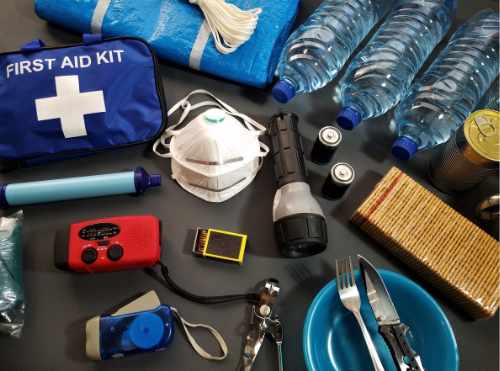
The power has been out for 36 hours. What do you wish you had?
- Drinking water and ready-to-eat food
- A flashlight and spare batteries
- Needed medications and a way to charge essential devices
- All of the above
Reveal the best move
The answer is all of the above.
Build your supplies around your specific household's needs and work toward several days of self-sufficiency. Keep what your pets and family need to survive comfortably.
Next step: Use the emergency kit checklist →
BONUS ROUND

The Great Fridge Debate: the power has been out for six hours. What's your first thought?
- Throw out everything, including ketchup. Trust no one.
- Rely on the sniff test. The nose knows.
- How long will food stay safe, and what supplies do I need?
- Move everything to the freezer.
Reveal the verdict
Every answer is valid (especially the coffee one).
Food safety tip: a closed fridge keeps food cold for about 4 hours, and a full, closed freezer for about 48. Keep the doors shut!
Be honest: what's your current emergency kit situation?
- A real kit, ready to go. Even the seagulls are impressed.
- Supplies scattered around the house like a scavenger hunt at the Boardwalk.
- One granola bar, three expired batteries and the confidence of a surfer ignoring a beach hazard sign.
- I’m prepared for a foggy beach day, not three days without power
Reveal the best move
No judgment. Start small.
Begin with water, food, medications, a flashlight, batteries, a first-aid kit and copies of essential documents. Build from there.
Next step: Build your kit →
If your usual road is closed during an evacuation, what's Plan B?

- I know another route and where my household will meet.
- I'll follow everyone else.
- I'll open a map app and hope for the best.
- I'll call an uber
Reveal the best move
Best move: know another route and a meeting place.
Cell service, internet and roads may be disrupted. Pick alternate routes and a meeting place in advance, and never use a route authorities have closed.
Next step: Make a household plan →
Level 4: Meet your neighbors

The power is out, roads are blocked and cell service is down. How many neighbors do you know that you could check on?
- At least three.
- I avoid interacting with different generations, but know a few of their dogs by name
- Does waving from the driveway count?
- We hang out regularly. We know where the gas turn-off valves are at one another's houses, and keep a cache of chocolate in a safe spot to share in a disaster.
Reveal the best move
Knowing even a few neighbors makes a real difference.
Connected neighborhoods fare better in an emergency. Introduce yourself to one neighbor and agree on how you'll check in during an emergency.
Next step: Team up with neighbors →
BONUS ROUND

Zombie apocalypse question: you can recruit only one neighbor for your emergency team. Who do you pick?
- The neighbor with the generator and solar batteries.
- The neighbor who served as an army medic 20 years ago.
- The neighbor who knows everyone.
- The neighbor with the truck.
- The neighbor with the garden and canning equipment. Their homemade peach preserves are epic.
Reveal the verdict
Plot twist: a good team needs all of them.
You don't have to wait for zombies to get to know your neighbors. A neighborhood that pools its resources is self-sufficient for longer and has better outcomes in a disaster.
Next step: Join CERT →
Who in your neighborhood might need extra help during an evacuation or extended outage?
- An older adult who lives alone.
- Someone who relies on powered medical equipment or accessible transportation.
- A family without a car.
- A person who fosters cats and dogs and may have trouble getting them all crated.
Reveal the best move
Start with a simple conversation.
Talking with neighbors helps you identify needs, share resources and plan how to check on each other. Sharing a car with your neighbor reduces by 50% the number of vehicles you both might otherwise take to evacuate, and in places with limited ways in and out, this matters.
Level 5: Be part of the solution

Emergency preparedness is...
- The City's job.
- My job.
- A team sport involving residents, neighbors, community organizations and local government.
Reveal the best move
FINAL ROUND
Santa Cruz Survival Bingo: tap every square you've already done.
Signed up for local emergency alerts
Checked my neighborhood's hazards
Made a household communication plan
Packed emergency supplies
Met a neighbor I could call for help
Identified an alternate evacuation route
Helped someone else get prepared
Tapped one by mistake? Tap it again to unstamp it. Now count your DONE squares.

Meet your preparedness pet
How many bingo squares did you stamp? Tap your number.
0 to 2 squares
Your preparedness pet is...
The Sea Otter!
The Curious Scout
Sea Otter
Like a sea otter in the kelp, you're curious and starting to explore. Every great prepper starts right here.
Your mission: Learn which hazards could affect your neighborhood, then sign up for alerts. Because even sea otters need a heads-up when things get choppy.
Start your mission →
3 to 4 squares
Your preparedness pet is...
The Squirrel!
The Supply Squirrel
Squirrel
You're gathering resources for the long winter. Your stash is growing and it shows.
Your mission: Check that your supplies match your household's needs, and make sure you can receive alerts.
Start your mission →
5 to 6 squares
Your preparedness pet is...
The Banana Slug!
The Neighborhood Connector
Banana Slug
Like the banana slug of our redwood forests, you know everything is connected. Preparedness is a team effort.
Your mission: Make a plan with your neighbors and figure out how you'll help one another.
Start your mission →
All 7 squares
Your preparedness pet is...
The Sea Lion!
The Ready-for-Anything Local
Sea Lion
Like the sea lions under the wharf, you shrug off whatever the Pacific throws at you. You've built strong habits.
Your mission: Keep your plans current, practice them, and help someone else get ready.
Start your mission →
What's one thing you'll do today to help Santa Cruz get ready?
Pick one and do it now. Small steps add up across a whole community.